Jewelry Buyer in Maryland
If you're looking for a jewelry buyer in Maryland, Maryland Cash For Gold buys gold, silver, platinum, palladium and rhodium jewelry at our Parkville location. From rings, chains and bracelets to broken jewelry, estate collections, designer pieces and precious-metal watches, we'll test your items in front of you and explain what we find before making a cash offer.
You don't need to know whether your jewelry is real, what purity it is or what it's worth before you visit. Our team has more than 25 years of experience evaluating jewelry and precious metals, and Maryland Cash For Gold LLC is a licensed Maryland Precious Metals Buyer.
Visit us at 1746 East Joppa Rd in Parkville, Maryland for a free, no-obligation evaluation.
Walk-ins are welcome, or you can make an appointment.
Assortment of jewelry
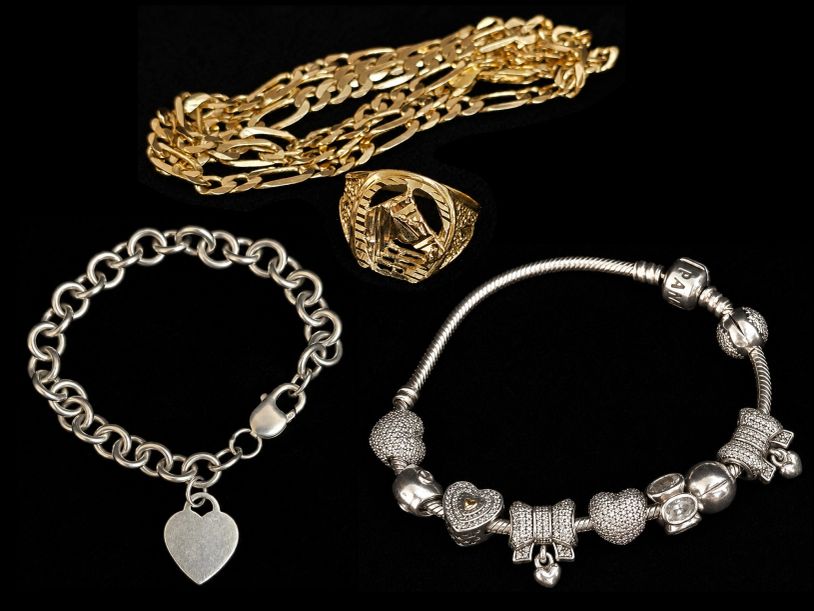
Gold and precious-metal jewelry purchased by Maryland Cash for Gold in Parkville, Maryland.
Not Sure If Your Jewelry Is Real? Bring It In.
One of the most common things customers tell us is:
“I'm not sure if this is real.”
That's okay. You don't have to know before you visit.
A piece without a visible karat or purity stamp isn't necessarily worthless. At the same time, a piece stamped “14K” isn't necessarily genuine. Stamps and hallmarks can provide useful information, but we don't rely on them alone.
We use professional testing equipment to determine what items are actually made of and their precious-metal purity. Testing is performed in front of you, so you can see the process and better understand what you have.
If you have old jewelry sitting in a drawer because you're unsure whether it's real gold, silver or another precious metal, don't assume it's worthless based on appearance or markings alone.
Bring it in and let us test it. The evaluation is free, and there's no obligation to sell.
What Types of Jewelry Do We Buy?
Maryland Cash For Gold buys many types of jewelry containing gold, silver, platinum and certain other precious metals. Your jewelry doesn't need to be new, fashionable or even wearable to have value.
Gold Jewelry
We buy gold jewelry including:
- Rings and wedding bands
- Engagement rings
- Necklaces and chains
- Bracelets
- Earrings
- Pendants
- Charms
- Brooches and pins
- Cufflinks
- Body jewelry
- Designer and branded jewelry
- Broken and damaged jewelry
We buy 10K gold and higher purity including 12K, 14K, 18K, 20K, 22K, and 24K gold jewelry.
Silver, Platinum and Other Precious-Metal Jewelry
We also buy jewelry containing:
- Silver of 90% purity or better
- Platinum
- Palladium
- Rhodium
Not sure what metal your jewelry contains? You don't need to determine that before coming in. We can test potential precious-metal jewelry and show you what we find.
Broken, Damaged and Unwanted Jewelry
A broken chain, single earring or damaged piece of jewelry can still have precious-metal value.
We buy jewelry even when it's broken, damaged, mismatched or simply something you no longer wear. In many cases, the condition of the piece doesn't prevent us from purchasing it for its precious-metal content.
Don't throw away broken jewelry just because it can't be worn. It may still contain gold, silver or another precious metal we buy.
Precious-Metal Watches
We buy working and non-working watches that contain precious metals. Our primary interest is in the precious-metal content, although characteristics such as brand, model and condition may sometimes affect value.
An expert at Maryland Cash For Gold visually examines a watch to determine whether we are comfortable making an offer and evaluate its precious-metal content.
What Don't We Buy?
We do not buy gold-plated or gold-filled jewelry or jewelry that doesn't meet our precious-metal buying requirements.
Some mixed-metal pieces may also not qualify when the precious metals cannot reasonably be separated from the other materials.
How We Evaluate Your Jewelry
Evaluating jewelry involves more than simply looking for a karat stamp or placing an item on a scale. We inspect the piece, analyze its precious-metal content, determine its weight and consider whether there are characteristics that could affect its value beyond the metal itself.
1. Inspect the Jewelry
We begin with a visual examination, using a loupe when appropriate.
We look for characteristics such as karat or purity stamps, hallmarks, maker's marks, designer or brand markings, construction and other identifying details.
The initial inspection can also alert us to pieces that may deserve additional research before we determine their value.
2. Analyze the Precious-Metal Content
We use the Hitachi X-MET8000 XRF analyzer to evaluate precious metal content in jewelry.
The X-MET8000 provides an elemental analysis of the area being tested, helping us determine the precious-metal composition and purity of the jewelry. Depending on the piece, we may scan more than one area because different components of the same item can sometimes have different metal compositions.
XRF analysis is non-destructive, and testing takes place in front of you. Our customer-facing monitor allows you to see testing information during the evaluation.
3. Weigh the Jewelry
Once we've determined that an item contains qualifying precious metal, it is weighed using our A&D FX-i precision balance.
Weight matters because the amount of precious metal in an item, together with its purity and current market price, helps establish its underlying precious-metal value.
4. Evaluate the Complete Piece
Most jewelry we purchase is valued primarily according to its precious-metal content. However, we also look for characteristics that may make a piece worth more than melt value.
That can include a recognized designer or brand, distinctive design, condition, collectibility or potential resale demand.
When applicable, we can also use a portable tester employing thermal and electrical properties to help distinguish diamonds, synthetic diamonds and moissanite. We may work with a third party to determine the value of a diamond.
5. Determine the Value and Make an Offer
After we've identified the precious metal, determined its purity and weight, and considered any other characteristics that may affect value, we'll explain what we've found and make a cash offer.
The evaluation is free, and you're under no obligation to sell.
6. Verify the Jewelry and Complete the Sale
If you accept our offer, we may perform a final verification. For jewelry, this may include a scratch and acid test to confirm the precious-metal content before completing the transaction.
We'll then complete the required identification and paperwork and pay you in cash.

The process we follow from inspecting your jewelry all the way to paying you in cash.
How Much Is My Jewelry Worth?
There isn't one price per gram that applies to every piece of jewelry.
For most jewelry we purchase, value is based primarily on what precious metal the item contains, its purity, its weight and current precious-metal market prices. In some cases, a recognized designer, brand or other characteristic may make the complete piece worth considering for resale rather than solely for its precious-metal content.
Precious-Metal Purity
Different karats contain different proportions of gold. A 14K piece, for example, is 14 parts out of 24 parts (58.3%) gold.
Yet an item stamped 14K may not actually contain that amount of gold, which is why testing each piece is essential to determine the actual precious-metal content and purity.
Weight
Once the metal and purity have been established, weight helps us determine how much precious metal the item contains.
This is also why the question “How much do you pay per gram?” doesn't have one universal answer. The metal, purity and current market price must also be considered.
Current Precious-Metal Prices
Gold, silver and platinum market prices fluctuate. Prices can change from one day to another and even during the same day.
An offer you received for an item at an earlier date therefore doesn't necessarily establish what the same piece is worth today.
Why Isn't the Price I Paid What My Jewelry Is Worth Today?
One of the biggest sources of confusion when selling jewelry is that several very different numbers can be associated with the same piece.
The original retail price, an insurance appraisal, resale value, precious-metal value and a buyer's cash offer are not the same thing.
Original Retail Price
When you purchase a new piece of jewelry, you're paying for much more than the precious metal it contains.
The retail price can include design, manufacturing, labor, retailer overhead, marketing and markup, in addition to the materials used to make the piece.
Put simply, you may have paid $500 for a bracelet because you liked the bracelet - not because it contained $500 worth of gold.
Insurance or Appraisal Value
An insurance appraisal generally reflects what it could cost to replace an item if it were lost, stolen or damaged.
If the exact piece is no longer available, that could involve estimating the cost of recreating it or purchasing something comparable.
That figure isn't necessarily the amount someone would pay to purchase your used jewelry from you.
Resale Value
Resale value reflects what another buyer may be willing to pay for the complete piece as used jewelry.
For certain designer, branded, collectible or otherwise desirable pieces, resale value may be an important consideration.
Precious-Metal Value
Precious-metal value is based on the item's metal, purity, weight and current market price.
For Maryland Cash For Gold purchases, this is the primary basis for determining jewelry value, although other metrics may be considered.
Our Cash Offer
Our offer will generally be based on a percentage of the item's precious-metal value or, in certain cases, on an amount we're willing to pay based on its potential resale value.
Our goal is to determine what the item is worth in the current market and make a competitive cash offer based on what we actually find during the evaluation.
What About the Diamonds and Gemstones in My Jewelry?
Maryland Cash For Gold does not purchase loose gemstones. Our primary business is purchasing precious-metal items, and we generally don't pay additional money upfront for stones attached to jewelry.
In many cases, however, we don't deduct the full estimated weight of attached gemstones when weighing jewelry, even though those stones may ultimately have little or no additional value to us.
When applicable, we can use a portable tester employing thermal and electrical properties to help distinguish diamonds, synthetic diamonds and moissanite. This testing does not determine a diamond's clarity or color. Any further evaluation of a potentially valuable stone occurs later and off premises.
What If I Want to Keep My Stone?
If you want to keep a diamond or other gemstone for sentimental or other reasons, remove it before you finalize the sale of the jewelry.
Once Maryland Cash For Gold purchases your item, Maryland law requires us to hold it at least 18 days.
During the holding period, Maryland law generally prohibits a dealer from altering the purchased precious-metal object. Because removing a stone would alter the jewelry, we cannot remove it for you during the required holding period.
What If a Stone Turns Out to Be Valuable?
Most gemstones attached to jewelry we purchase have little or no additional value to us. However, after the required holding period, jewelry may undergo further evaluation before it is sent for melting.
If an attached gemstone is determined during that process to have additional value, our practice is to contact the original seller and let them know that additional money is available.
One of our customers describes exactly that experience:
“Went in a few weeks ago with a few items. One piece apparently they recieved extra for a stone that was in a ring I sold and they called today to give me some more money. Very fair people. I highly recommend!”
- Ron J.
Selling Designer and Branded Jewelry
Most jewelry we purchase is bought primarily for the precious metals it contains. Sometimes, however, a piece deserves a closer look.
Recognized designer or branded jewelry may have resale value beyond its gold, silver or platinum content. Brands we encounter include Tiffany & Co., Cartier and Effy, among others.
We begin by visually examining the piece and looking for the details we know to consider. If we're not sufficiently confident about its authenticity or potential resale value, we may ask whether you have supporting documentation, make an offer based on what we can establish, or have the item examined by one of our outside partners.
If you have the original box, receipt or other paperwork, bring it with you. Documentation can help us evaluate authenticity more efficiently and may affect the offer we're willing to make.
When we believe a piece has resale potential, we can research current prices for comparable items in similar condition. Our offer may be affected by the required holding period, potential authentication costs, selling expenses, the time it may take to find a buyer and the possibility that market conditions may change before the item is sold.
Selling an Estate or Jewelry Collection?
You don't have to identify every piece in an inherited jewelry collection before bringing it to us.
We evaluate entire jewelry boxes, estate collections and groups of jewelry, even when the owner doesn't know which pieces are genuine gold, silver or other qualifying precious metals.
We'll sort through potential qualifying pieces and test them individually in front of you. There is no additional sorting or evaluation fee.
If costume jewelry is mixed in with precious-metal jewelry, that's okay. We'll identify which pieces meet our buying criteria during the evaluation.
Larger collections naturally take longer because each potential item needs to be examined and tested individually.
One tip before you visit: If you're bringing several tangled necklaces, chains or bracelets, untangling them beforehand can make the evaluation considerably faster.
Before Selling Your Jewelry: Common Mistakes to Avoid
A few common assumptions can cause people to overlook jewelry that may have value.
Don't Assume an Unmarked Piece Is Worthless
Not every piece of genuine precious-metal jewelry has an obvious stamp. If you're uncertain, let us test it rather than assuming it has no value.
Don't Assume a Karat Stamp Guarantees It's Genuine
The reverse is also true. A stamp that says “10K,” “14K” or “18K” doesn't by itself establish what the item is actually made of.
That's one reason we test jewelry rather than relying solely on markings.
Don't Throw Away Broken Jewelry
A broken chain, single earring or damaged piece may still contain valuable gold, silver or another precious metal.
The fact that you can no longer wear it doesn't necessarily mean it has no value.
Don't Assume Old, Designer or Diamond Means Valuable
Age, a designer-looking appearance or the presence of a gemstone doesn't automatically make a piece worth more.
Some pieces may have additional resale or collector value, but others are worth primarily what their precious-metal content supports. The best way to know is to have the actual piece evaluated.
Before You Visit
Walk-ins are welcome. No appointment is necessary.
If you plan to sell, please bring a physical, valid, non-expired driver's license or state-issued ID. We cannot accept a photograph or image of your identification on your phone.
If you don't have a driver's license or state ID, bring two forms of photo identification. At least one must show your date of birth and current address.
Selling designer or branded jewelry? Bring the original box, receipt, certificates or other paperwork if you have them.
Want to keep an attached gemstone? Have it removed before finalizing the sale.
Bringing a large collection? Untangling chains, necklaces and bracelets before your visit can help speed up the evaluation.
Why Sell Your Jewelry to Maryland Cash For Gold?
Selling jewelry should be a process you can understand.
At Maryland Cash For Gold, your jewelry is evaluated in front of you in a private room. We use professional testing equipment to determine what metal content items contain rather than relying solely on stamps or appearance, and our customer-facing monitor lets you see testing information during the process.
Our team has more than 25 years of experience evaluating jewelry and precious metals, and Maryland Cash For Gold LLC is a licensed Maryland Precious Metals Buyer.
We'll explain what we've found and the offer we're making before you decide whether to sell.
Free evaluation • No obligation to sell • Cash payment
Free parking out front • Handicap accessible
private jewelry testing area
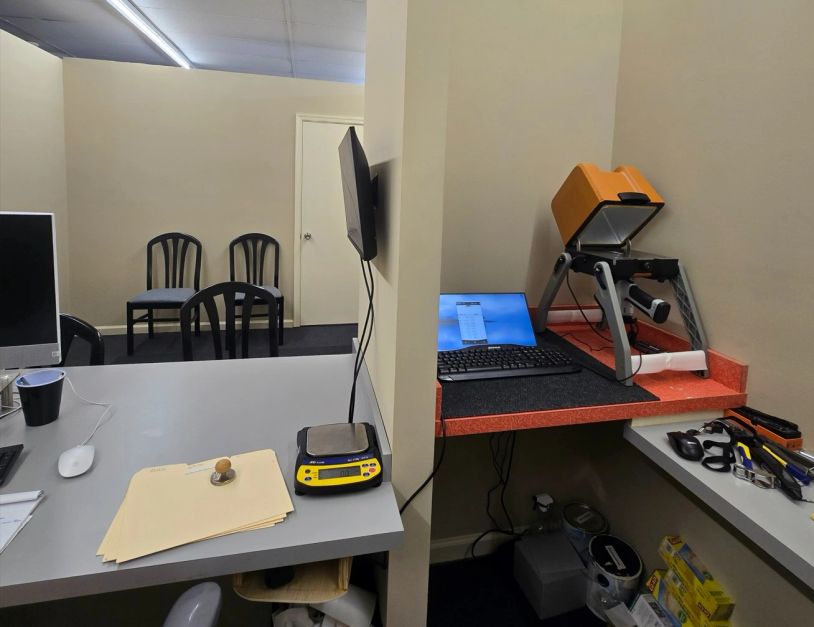
Private area where Maryland Cash for Gold sits with customer to evaluate jewelry.
What Customers Say About Maryland Cash For Gold
Cordia G.
Cordia G.
Cordia G.
“I had a ton of broken jewelry and single earrings. I saw gold was at a very high price, so I took my broken jewelry to a couple different places. Maryland Cash for Gold easily offered me the most money. The process was easy and the staff very helpful. I highly recommend this business.”
Its S.
Cordia G.
Cordia G.
“Sold 2 chains they were honest and offered a great price”
Michael S.
Michael S.
Michael S.
“Got way more than I expected. Super cool people and very transparent with their testing process. Got over 200 more than offered by another nearby place. Thanks!”
Jerry F.
Michael S.
Michael S.
“Staff is friendly and welcoming. Does everything in front of you so you can see. Definitely the right price for what I brought in. Will consider to anyone!”
Visit Our Jewelry Buying Store in Parkville, Maryland
Looking for a jewelry buyer in Maryland where you can have your jewelry tested and evaluated in person? Visit Maryland Cash For Gold in Parkville.
Maryland Cash For Gold
1746 East Joppa Rd
Parkville, MD 21234
Phone: (410) 908-4889
Hours:
Monday–Friday: 10:00 AM–5:00 PM
Saturday: 10:00 AM–4:00 PM
Sunday: Closed
Walk-ins are welcome. Appointments are also available.
Our Parkville location is convenient for people looking to sell jewelry throughout Baltimore County and surrounding Maryland communities, including Baltimore, Towson, Perry Hall, White Marsh, Timonium and Cockeysville.
Free parking is available directly in front of the store, and the location is handicap accessible.
Frequently Asked Questions About Selling Jewelry
Maryland Cash For Gold buys gold, silver, platinum, palladium and rhodium jewelry, including rings, wedding bands, engagement rings, necklaces, chains, bracelets, earrings, pendants, charms, brooches, cufflinks and body jewelry. We also buy broken and damaged jewelry, qualifying precious-metal watches, designer pieces and entire jewelry collections.
We do not buy gold-plated or gold-filled jewelry.
You can sell gold and other precious-metal jewelry at Maryland Cash For Gold, 1746 East Joppa Rd in Parkville, Maryland. We provide free, no-obligation evaluations and test jewelry in front of you before making a cash offer. Walk-ins are welcome, and appointments are also available.
We buy 10K gold and higher purity including 12K, 14K, 18K, 20K, 22K, and 24K gold jewelry. If you're unsure of the karat or your jewelry doesn't have a visible stamp, bring it in. We can test potential gold jewelry to determine its precious-metal content and purity.
Yes. We buy silver jewelry that is at least 90% silver, as well as platinum jewelry. We also purchase jewelry containing palladium and rhodium.
Yes. We buy broken, damaged and mismatched precious-metal jewelry, including broken chains and single earrings. Jewelry doesn't have to be wearable to have value. If it contains precious metal, its gold, silver, platinum or other precious-metal content may still make it worth selling.
Yes, an item doesn't need a visible karat stamp. A missing stamp doesn't prove that jewelry isn't gold or another precious metal, just as a karat stamp doesn't guarantee that an item is genuine. We test potential precious-metal jewelry rather than relying solely on its markings.
We begin by visually inspecting the jewelry and looking for hallmarks, purity stamps, maker's marks and other identifying characteristics. We then use a Hitachi X-MET8000 XRF analyzer to help determine the item's elemental composition and precious-metal purity. Depending on the jewelry, we may test multiple areas of the piece.
Qualifying jewelry is weighed using an A&D FX-i precision balance. If you accept our offer, jewelry may also receive a final scratch and acid test when appropriate before the sale is completed.
Yes. Your jewelry is evaluated in front of you in a private testing room rather than being taken away for an unexplained evaluation. Our XRF testing setup includes a customer-facing monitor so you can see testing information during the process.
There isn't one price per gram that applies to all gold jewelry. The value depends on factors including the item's gold purity, weight and the current market price of gold. A gram of 10K gold, for example, doesn't contain the same amount of pure gold as a gram of 14K or 18K gold.
Because precious-metal prices fluctuate, we evaluate the actual item and current market conditions before making an offer.
Not necessarily. A jewelry store's retail price includes more than the precious metal in the piece, such as design, manufacturing, labor, overhead and retail markup.
When selling used jewelry, value may instead be based primarily on its precious-metal content or, in some cases, the potential resale value of the complete piece.
Not necessarily. An insurance appraisal generally reflects the estimated cost of replacing or recreating an item if it is lost, stolen or damaged. That can be very different from its precious-metal value, resale value or the amount a buyer is willing to pay for the used piece.
Yes, as long as the jewelry meets our buying requirements. Most jewelry we purchase is valued primarily for its precious-metal content, but certain recognized designer or branded pieces may have additional resale value.
If you have the original box, receipt, certificates or other paperwork, bring them with you. They may help us evaluate the piece more efficiently and determine whether it warrants consideration beyond its precious-metal value.
Maryland Cash For Gold does not purchase loose gemstones. Our primary business is purchasing precious-metal items, and we generally do not pay additional money upfront for stones attached to jewelry.
When applicable, we can use a portable tester to help distinguish diamonds, synthetic diamonds and moissanite. This test does not determine a diamond's clarity or color.
Yes, but if you want to keep an attached stone, remove it before you finalize the sale.
Once Maryland Cash For Gold purchases a precious-metal object, Maryland law generally requires it to be held until at least 18 days after the required acquisition record has been submitted. During the applicable holding period, Maryland law generally prohibits the dealer from altering the purchased object. Because removing a stone would alter the jewelry, we cannot remove it for you during that period.
Most attached stones have little or no additional value to us. However, after the required holding period, jewelry may undergo further evaluation before being sent for melt.
If an attached gemstone is determined during that process to have additional value, our practice is to contact the original seller and let them know that additional money is available.
Yes. We buy jewelry from estates, inherited collections and entire jewelry boxes, and you don't have to know which pieces are genuine before bringing them in.
We can sort through potential pieces and test them individually. There is no additional sorting or evaluation fee. Larger collections take longer because each potential item needs to be examined and tested.
Yes, we buy working and non-working watches that contain precious metals. Our primary interest is in the precious-metal content, although brand, model, condition and other characteristics may sometimes affect value.
Jewelry evaluations are free, and there is no obligation to sell. We'll examine and test items, explain what we find and make an offer. You decide whether you want to accept it.
No. Walk-ins are welcome during regular business hours. Appointments are also available if you prefer to schedule your visit.
Bring a physical, valid, non-expired driver's license or state-issued ID. A photograph or image of the ID on your phone cannot be accepted.
If you don't have a driver's license or state ID, bring two forms of photo identification, with at least one showing your date of birth and current address.
If you accept our offer and complete the required identification and paperwork, Maryland Cash For Gold pays you in cash.
Not Sure What Your Jewelry Is Worth? Bring It In.
Whether you have one old ring, a broken gold chain, single earrings, a designer piece or an entire inherited jewelry collection, bring it to Maryland Cash For Gold for a free, no-obligation evaluation.
You don't need to identify the metal, determine its purity or figure out its value before you visit. We'll test qualifying items in front of you, explain what we find and make a cash offer.
You don't have to know what you have. And you don't have to sell.
Maryland Cash For Gold
1746 East Joppa Rd
Parkville, MD 21234
(410) 908-4889
This website uses cookies.
We use cookies to analyze website traffic and optimize your website experience. By accepting our use of cookies, your data will be aggregated with all other user data.